Case Study 03 — Omnichannel HCP Engagement
Experts don’t reject new ideas because they lack evidence. They reject them because the evidence is not yet personally relevant.
The Business Challenge
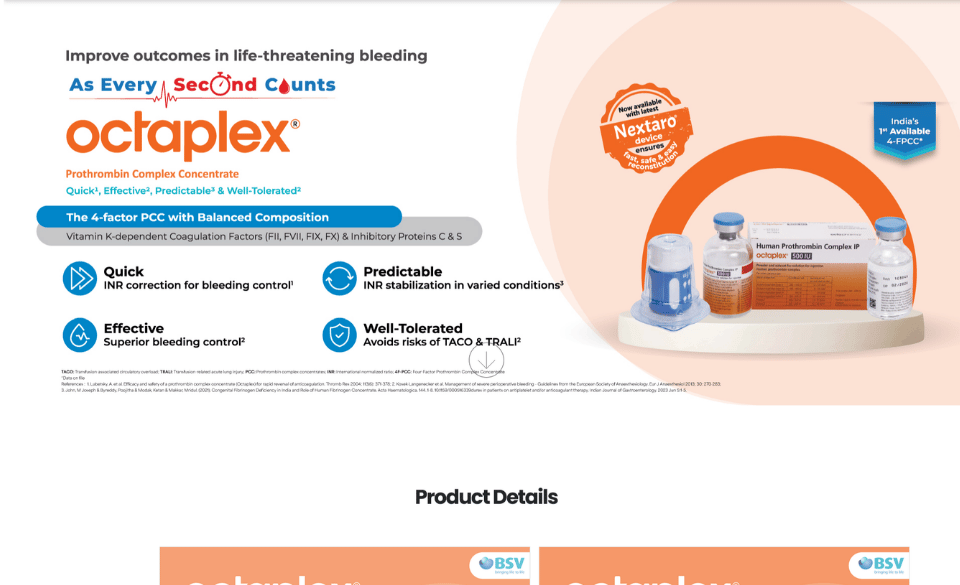
Octaplex (4-Factor Prothrombin Complex Concentrate) was targeted at highly specialized surgeons and anesthesiologists responsible for bleeding management during critical care procedures.
The challenge wasn’t awareness of science.
It was changing established clinical practice.
Medical Representatives had limited time with busy surgeons, and explaining complex scientific evidence in a short meeting rarely led to meaningful engagement or product adoption.
Where Growth Was Breaking
Alignment Gap: Scientific Evidence ≠ Clinical Relevance
Our communication focused heavily on clinical claims, regulatory evidence, and journal references.
While scientifically accurate, it didn’t answer the question every surgeon was silently asking:
“How does this help me make better decisions in the operating room?”
We were communicating evidence before creating relevance.
My Initial Hypothesis
If we educate surgeons about bleeding management first, rather than immediately promoting the product, they will naturally become more receptive to a new treatment approach.
Instead of asking surgeons to adopt a product, we needed to help them rethink the problem they were solving.
Only then would the product become a logical conclusion.
How I Rebuilt the System
I designed an omnichannel education journey around a single learning experience.
Rather than repeating promotional claims, every channel advanced the surgeon’s understanding.
Business Outcome
Increase in requests for additional product information during MR interactions
Increase in product trial and brand adoption (up from 23%)
Improvement in brand recall through consistent omnichannel messaging
Most importantly, field conversations changed.
Medical Representatives were no longer introducing an unfamiliar product—they were continuing a conversation surgeons had already started through multiple educational touchpoints.

The Principle I Took Forward
This project reinforced a principle I now apply across growth systems:
Build belief before asking for behaviour.
Customers rarely change because they receive more information.
They change when every interaction helps them understand the problem more deeply, builds confidence in a better approach, and naturally leads them toward the next decision.